Root Cause Analysis and Corrective Measures of Dissimilar Weld Joint Failure in a High Pressure Steam Pipe
Problem Definition
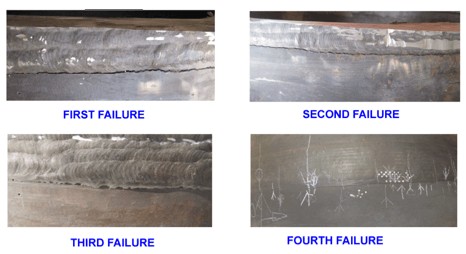
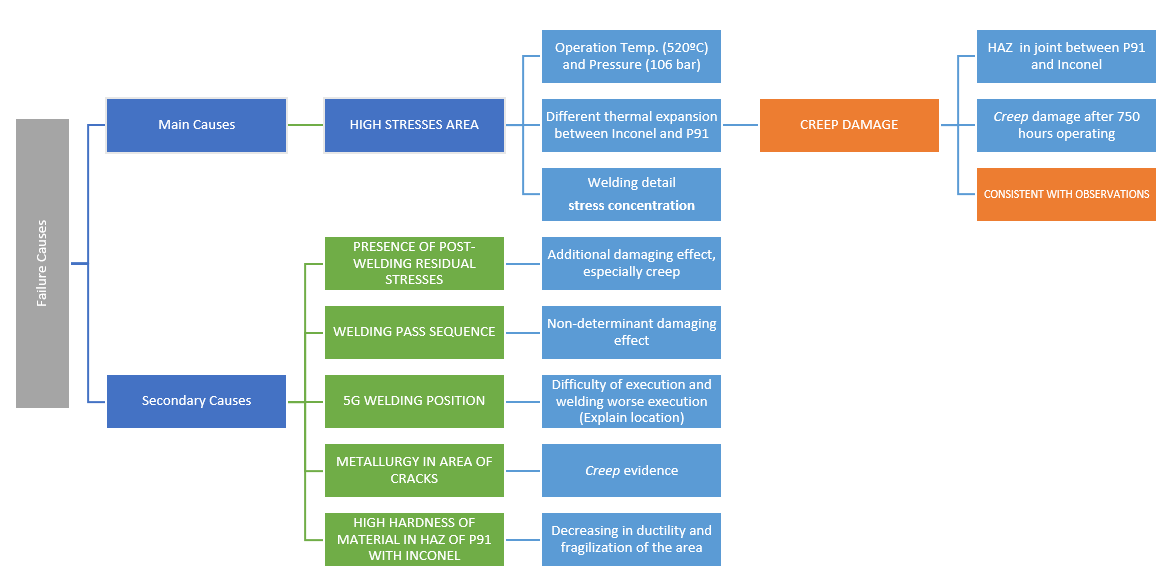
During the operation of a petrochemical plant (located in Middle East), recurring appearance of cracks in dissimilar metal welding joint of a critic, high pressure steam pipe has been detected (2010-2014).
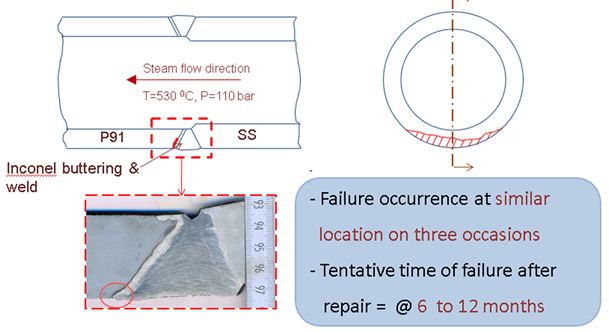
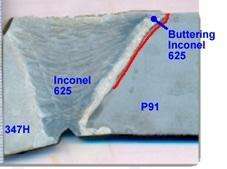
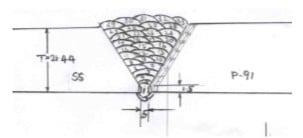
Cracks appear periodically over the same area, which is the butt weld joining two pieces made of different materials A-335-P91 and SS347H. Weld material is INCONEL625.
24” diameter and great thickness due to severe operating conditions: tª=530ºc, p=110 bar
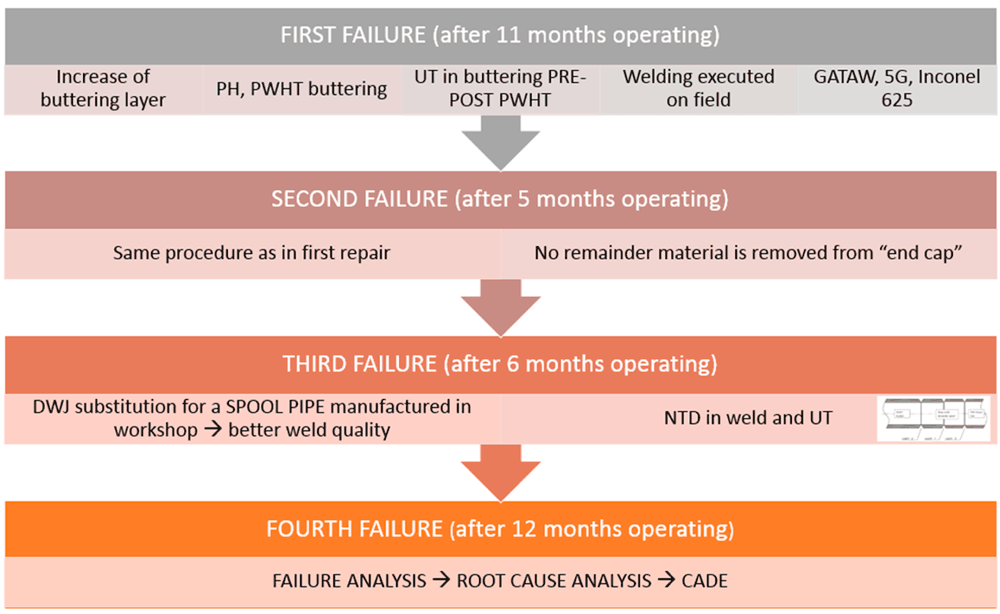
None of the reparations conducted so far has been effective to stop recurring breakage after 6-12 months.
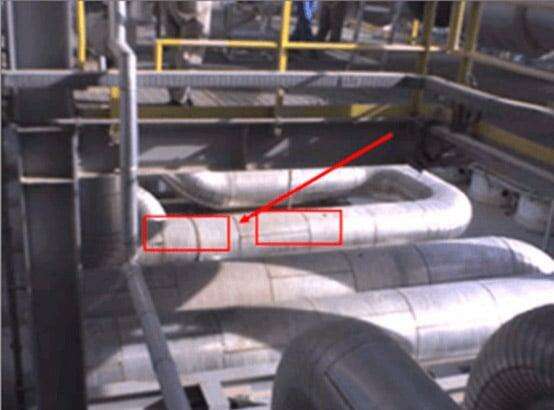
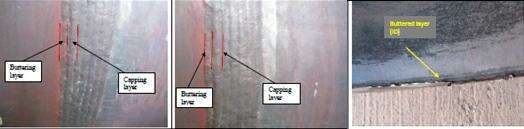
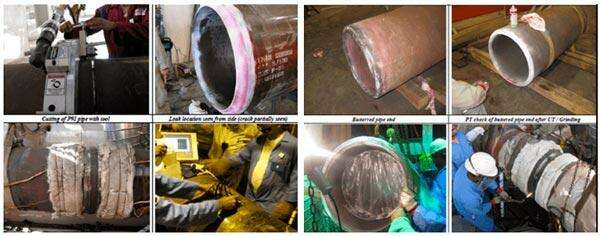
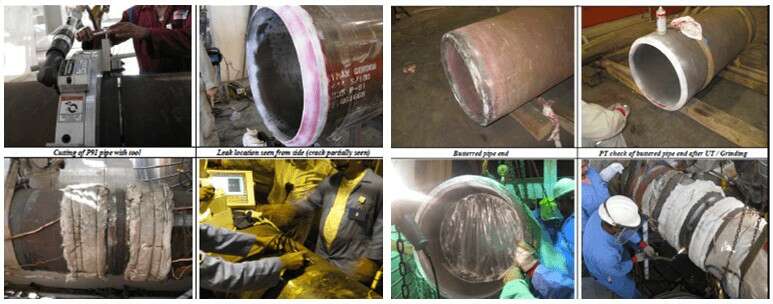
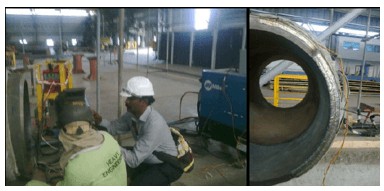
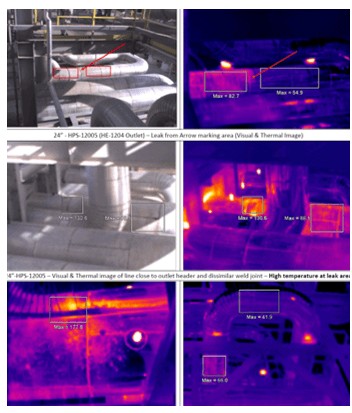
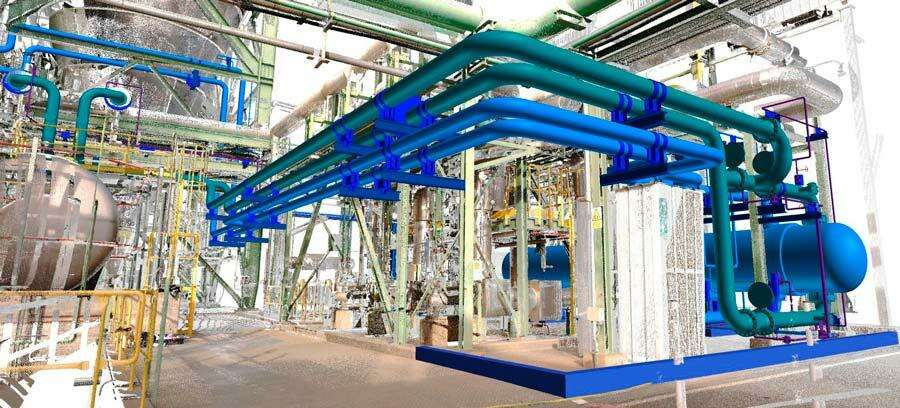
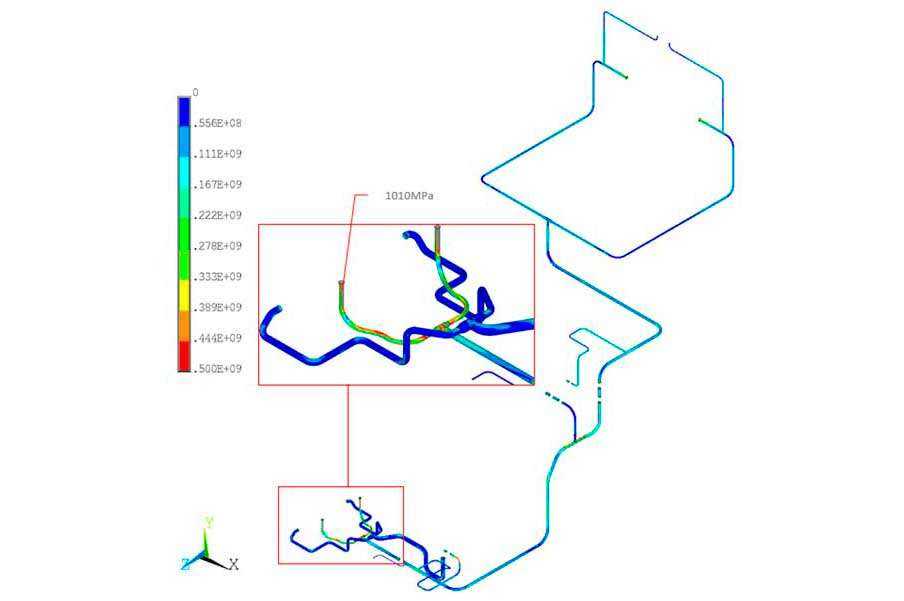
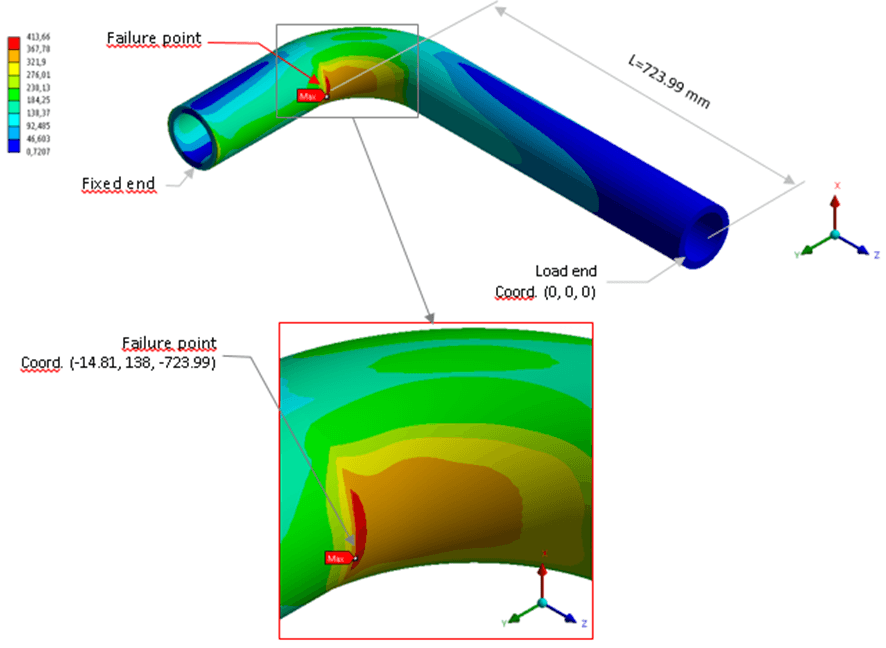
Fig. 1: 24″ High pressure steam pipe actual disposition and welding features
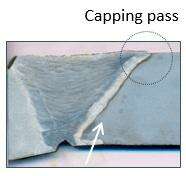
Fig. 2: Failures sequence
Methodology
Design and Fabrication Data:
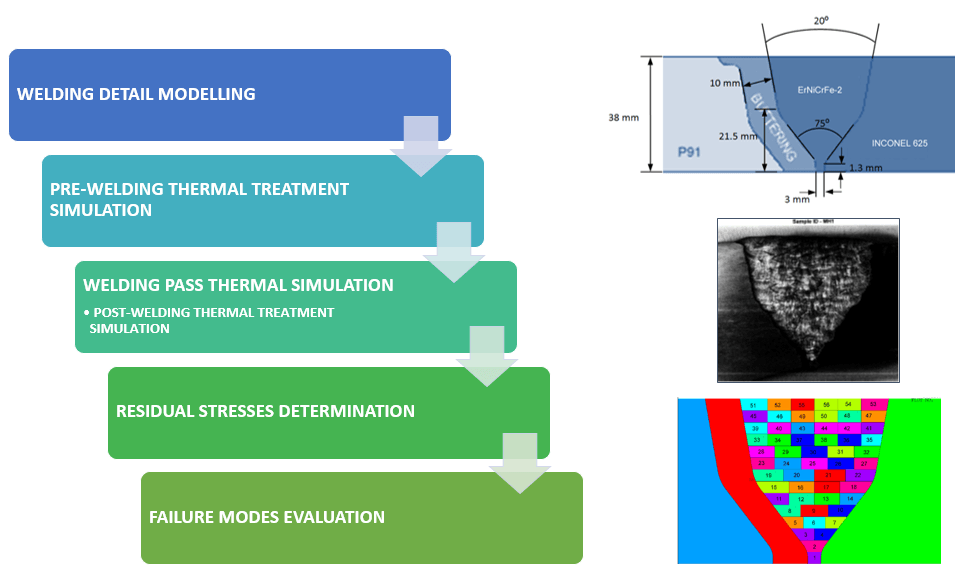
Welding detail
Welding process
Pre and Post welding thermal treatments
Materials (properties, storage…)
Inspections and NDT
Operation Data
Previous observations and Evidences
Failures record and details (critical area pictures, crack pictures…)
Macrographs, metallography, hardness tests, traction tests, chemical composition.
Regular Operation
Pipe and welding on operation conditions
Welding process
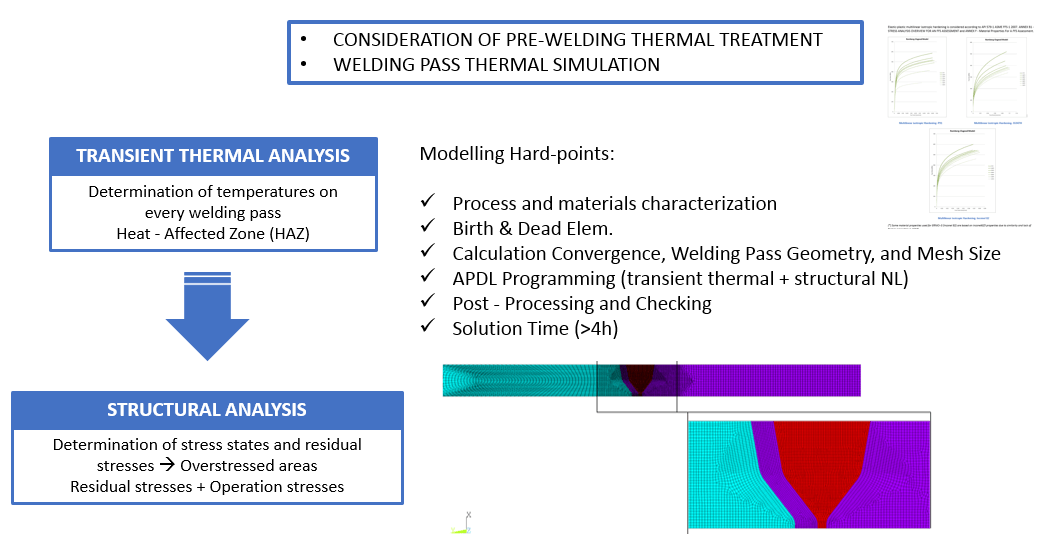
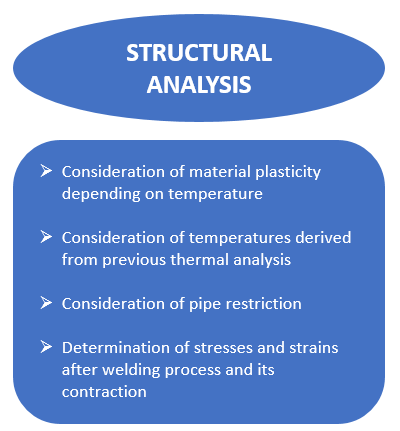
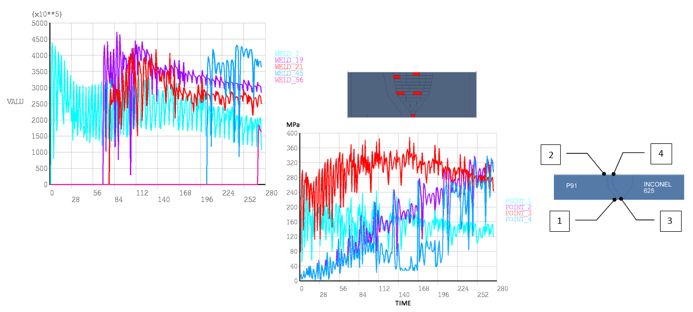
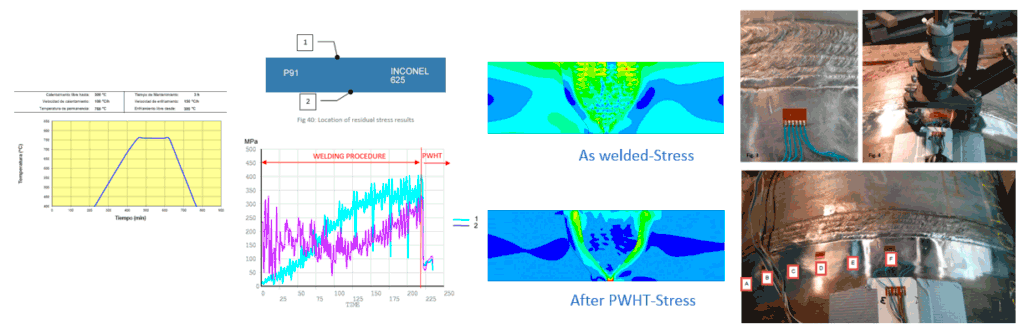
Residual stresses
Best Mechanical and Process Engineering Practices
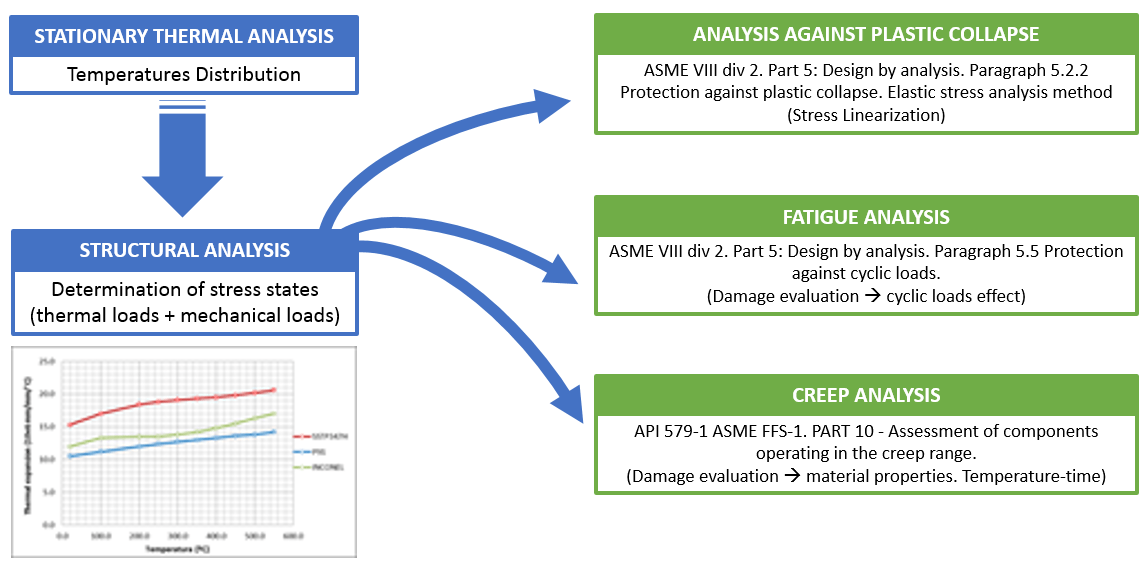
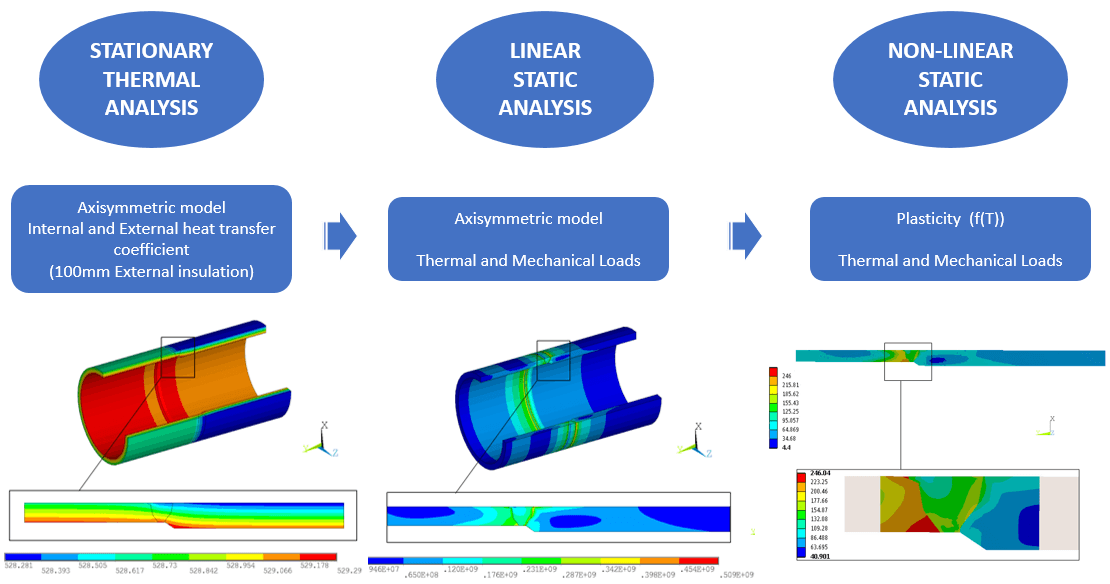
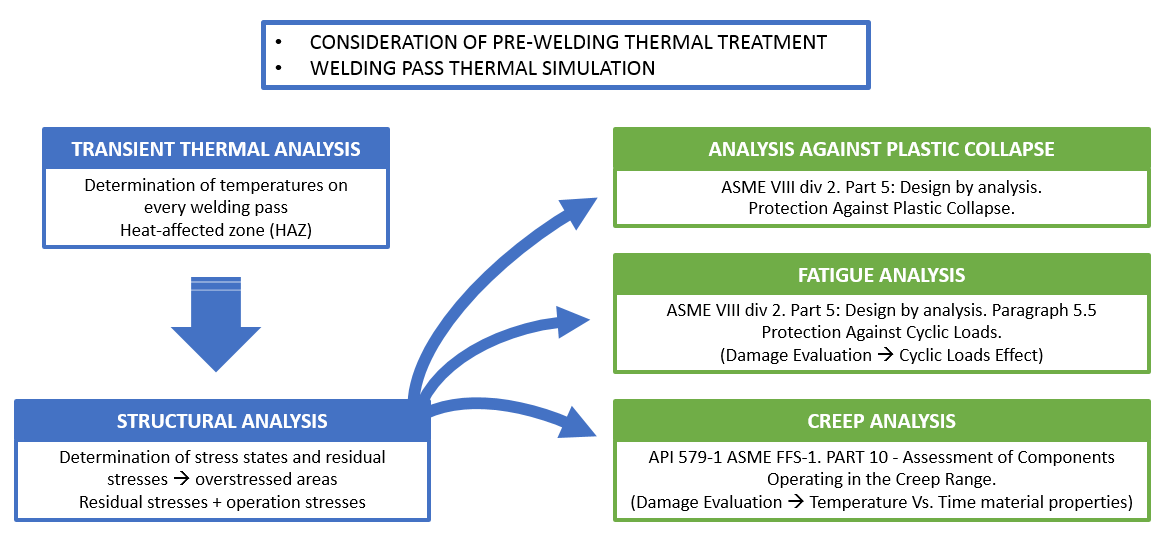
Simulation: FEA
International Codes (ASME, FFS)
Physical Modelling (understanding how it works)
Tests and Hypothesis Modelling
Corrective Measures Modelling
2.1: DETAIL LEVEL 1
Piping and welding analysis under operation conditions
2.2: DETAIL LEVEL 2
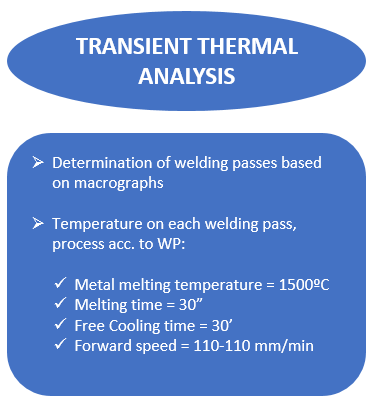
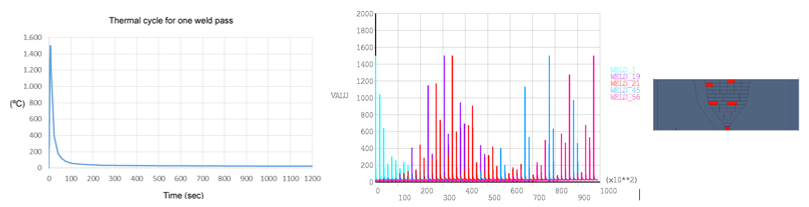
Welding process simulation
2.3. DETAIL LEVEL 3
Tests to obtaining residual stresses
Observations and Evidence
Laboratory Tests
Root Cause Analysis and Determination of Failure Cause
Specific proposal of corrective measures
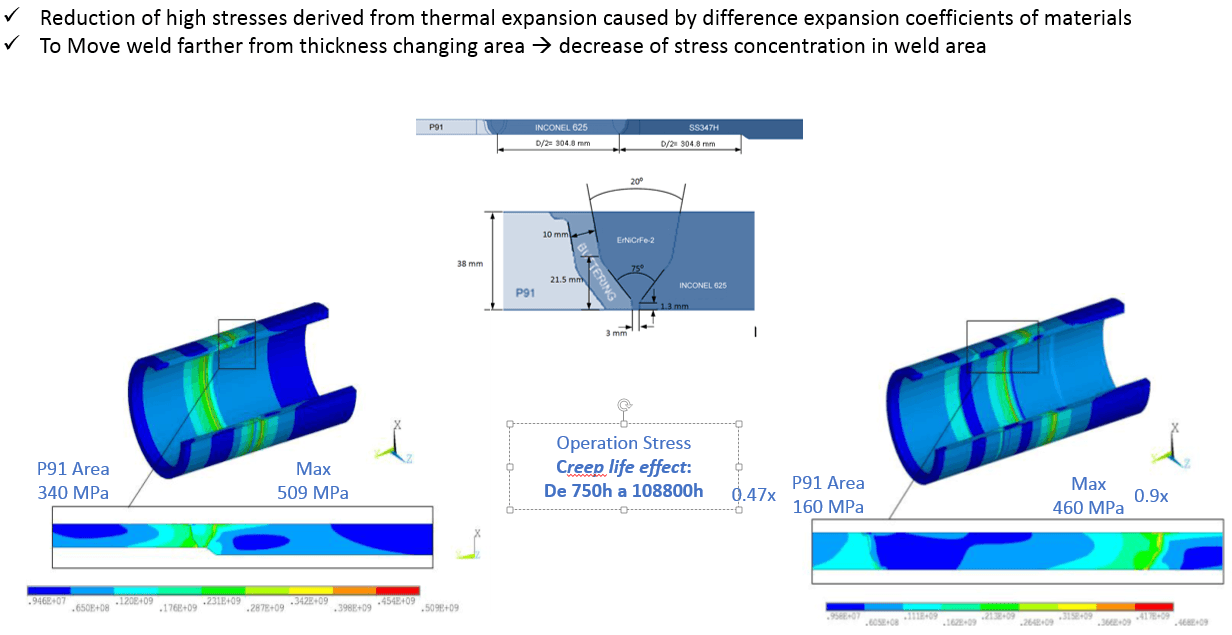
Modification of welding detail + Pipe spool
PWH
Modification of welding process and pass sequences
Modification of welding filler material
1. Problem Awareness
1.1 Failure identification
⇒ FAILING EVERY 6-12 MONTHS
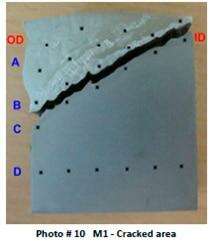
1.2 Location and Size Craks
CIRCUMF. between 100º-270º
LENGTH. 250mm-400mm
Crack on melting area
buttering Inconel 625 – P91
1.3 Inspections and NDT
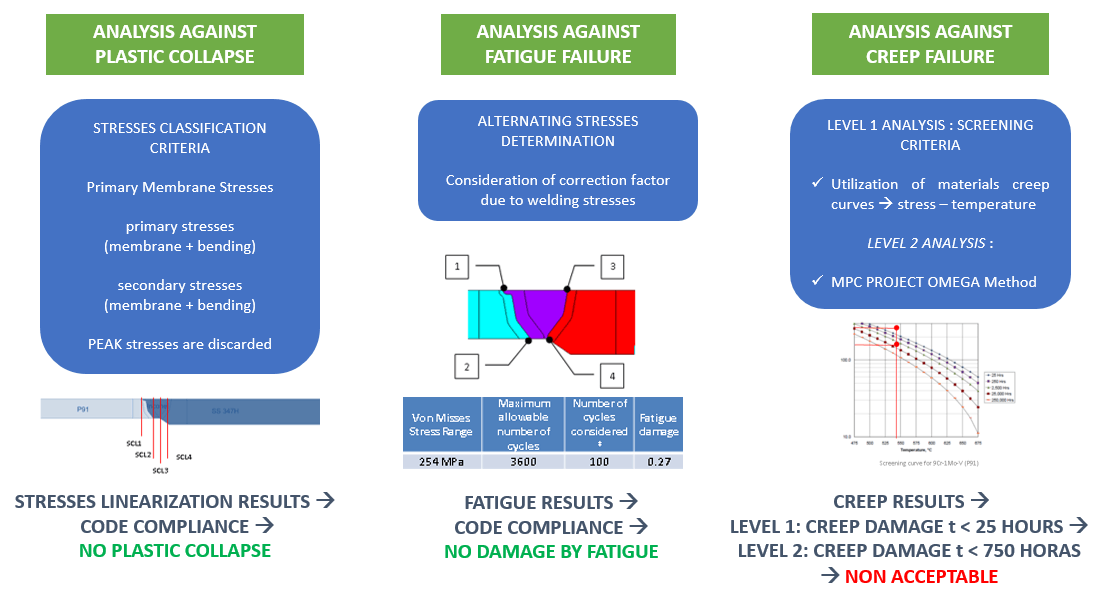
✔ Full cracks VT and superficial cracks (PT-NDE) ✔ Internal part of the pipe in crack location ⇒ inadequate filling
1.4 Fractography, Steroscopic Examination and Chemical Composition
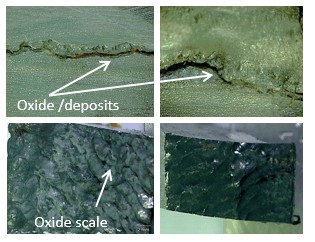
✔ Sreroscopy ⇒ oxide deposits ⇒ CAPING PASS ✔ Fractography ⇒oxide fragments on internal and external surfaces ✔ Chemical composition ⇒acording to materials specifications requirements
1.5 Metalography
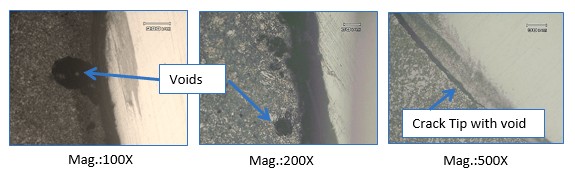
✔ Tempered martensite structure in P91, HAZ ✔ Dendritic austenitic structure in INCONEL and Buttering ✔ Tempered martensitic structure with ferrite in crack location area ✔ Presence of nucleation of voids and spheroidal graphite
1.6 Hardness test
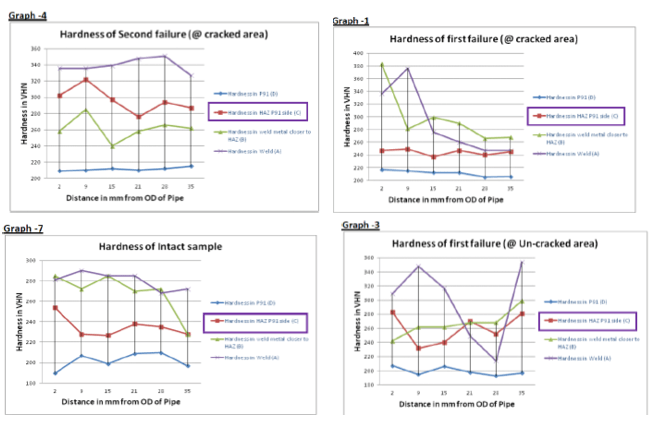
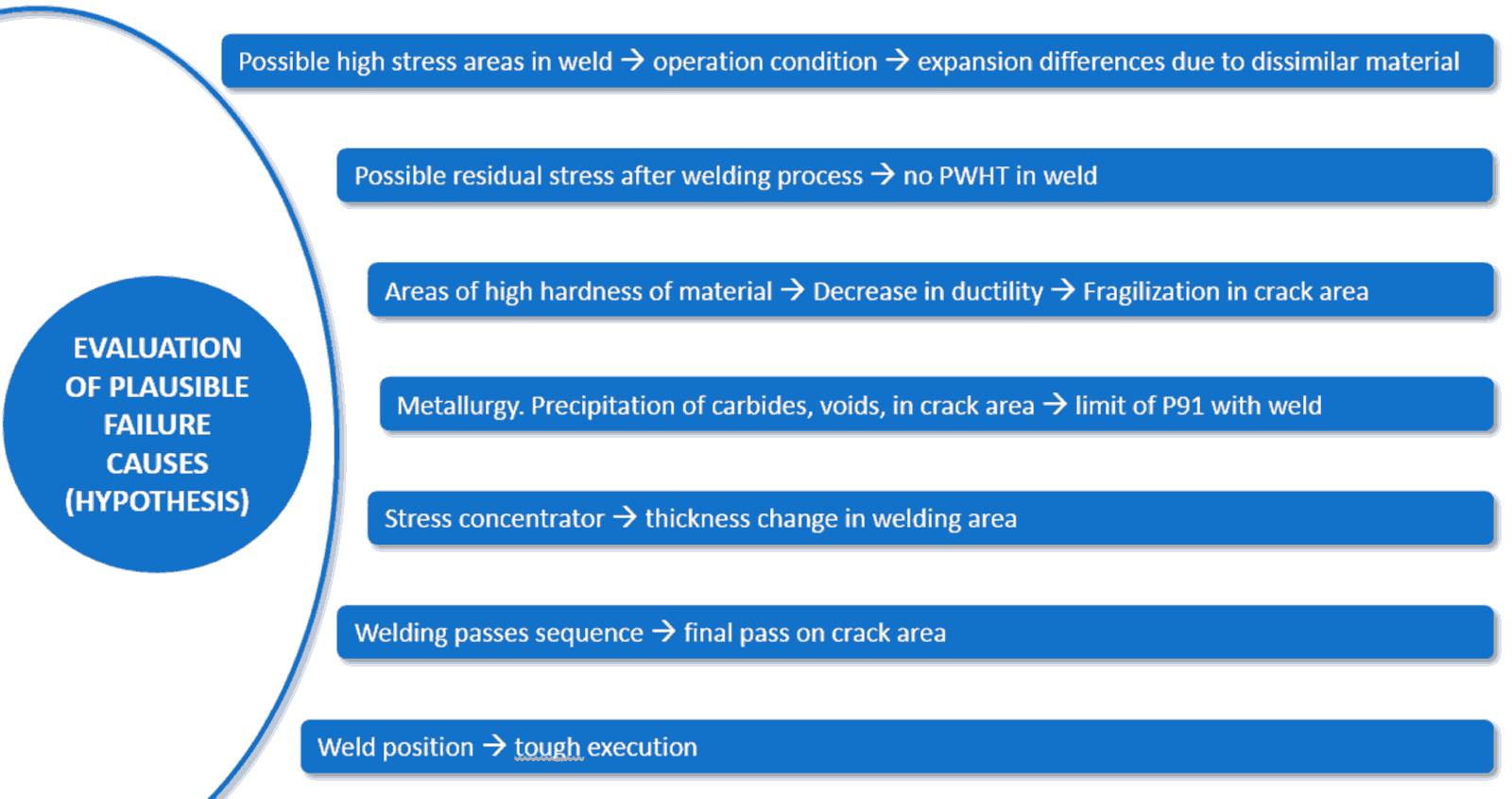
✔ Identification of high hardness points in HAZ areas of P91 and INCONEL, coincident with the location of cracks
1.7 Welding process and heating treatments
✔ Warm-up 200ºC ✔ Welding GTAW ✔ Welding 5g Weld / 2G buttering ✔ PWHT in buttering ⇒ no PWHT in welding
1.8 Operation conditions And support systems
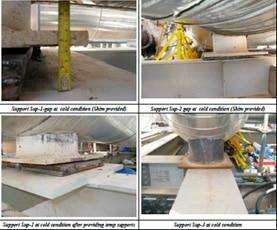
✔ Support Systems and stress Calculation with no anomalies detected ✔ Insulation temperatures are higher in leakages area
Installation of Spool Pipe section between P91 and SS347H
Definition of new PWHT
✔ Optimal PWHT treatment on weld area is defined ⇒ Decreasing residual stresses, decreasing material hardness, improving toughness ✔ Spacial care with reached temperatures (do not exceed 760ºC) ⇒ Fragilization issues ✔ Verification of residual stresses by means of FEA, and physical tests
Modification of Welding Pass Sequence
About the Project
Solution proposed has solved a critical and recurring problem which involved a high cost in terms of plant availability.
Root cause analysis and project execution was subjected to hard constraints of time, and had to be solved over a 2-months period (remaining time until Turnaround).
Solid and consistent methodology thanks to simulation.